
Contents
- A note before you begin
- Why we built CentrixConnect
- Current pressures in the healthcare sector
- Why that 'disconnect' is a big deal
- This problem is hard to tackle
- Unified systems are the route to better services
- What we feel good looks like
- Our version of a connected approach
- If you're debating a change, here's what to ask yourself
- Towards a clearer, cleaner, centralised future
- About our solution
- Glossary and references
Foreword
A note before you begin
Hello,
Thanks for taking the time to read this whitepaper. Before we begin, we'd like to offer you a little more detail around why we've written this, and how we think it will benefit the healthcare sector as a whole.
As you'll know, healthcare organisations depend on reliable operational systems long before a product reaches a clinic, a treatment room or a patient. Orders must be approved, goods received, stock located, batches traced, usage recorded and costs understood. When those activities sit across separate systems, spreadsheets and local workarounds, administrative burden grows - and has detrimental knock-on effects on how healthcare organisations run, and how care is provided.
This whitepaper examines that burden and the case for a more connected approach. We've written this for leaders who are responsible for operations and clinical services in healthcare. Those doing their best to keep services running, and running well, but who may not have a single, dependable view of what they need to see. Those areas being - procurement, inventory, finance and compliance.
Better operational unity improves the quality of information available to teams, and the quality of services as a whole.
That information supports stronger planning, clearer accountability and more consistent day-to-day processes. Having that oversight will also allow you to release time that is currently absorbed by order chasing, manual reconciliation, duplicate entry and audit preparation.
What this whitepaper does not intend to do, is assume that every organisation should replace every system. We will be introducing you to our solution, CentrixConnect, but we're not seeking to convince you that our platform is the answer to all of your operational inefficiencies. Rather, we want to share the issues we've seen, and how we came to that solution through our work.
We'll also be sharing practical ways to identify where disconnection is creating avoidable cost or risk, and where integration, standardisation or consolidation would make the greatest difference.
Thanks, Dave

Chapter 1
Why we built CentrixConnect
Healthcare teams have plenty of software, but we weren't convinced that all of those tools were making day-to-day working any easier.
Our work with CentrixConnect began with an observation made repeatedly across healthcare and healthcare technology: operational teams were spending too much time managing the gaps between systems.
Procurement data sat in one place. Stock records sat in another. Finance teams relied on separate information, while local teams maintained spreadsheets to bridge what the formal systems could not show. Each tool may have served a valid purpose, but the combined process was difficult to see, manage and improve.
The consequences spanned beyond just general frustration and inefficiency. Staff had to re-enter information, confirm order status manually, search for products across locations and reconstruct records before audits. Senior people were drawn into routine operational questions because the underlying information was incomplete or difficult to access. The primary cost of all of this is time, but that's not as singular as it sounds. For senior leadership teams - that's time away from organisational progress and business development. For clinical teams - that's time away from care. Both lead to stagnation, and overall dissatisfaction for stakeholders, staff, and patients.
We wanted to build a solution for this, but we also recognised that adding another isolated application wouldn't really resolve the problem. The requirement was for technology that could connect procurement, stock activity, reporting and compliance without making the working day more complicated. It was also important for us to design the solution in a way that actually works for healthcare teams. Familiar, unglamorous, but wholly efficient. Something that could be used without extensive training right from the get go.
CentrixConnect in numbers
Our solutions are used by over 1000 users across 200 health providers across the UK.
So, these became our early design principles
- Create a shared view of operational activity across teams and locations.
- Reduce manual steps while preserving appropriate approvals and oversight.
- Make traceability and reporting part of daily work rather than a separate exercise.
- Support existing finance, ERP, EDI and laboratory systems where integration is required.
- Keep workflows accessible for the people who use them in practice.
Chapter 2
Current pressures in the healthcare sector
Healthcare providers are being asked to improve access, productivity and financial control at the same time. How did we build to meet that demand, not just craft another software 'option'?
The current operating environment places sustained pressure on healthcare organisations to make better use of available resources. NHS England's 2025/26 planning guidance emphasised timely access, productivity, budget discipline and reform. Its commercial strategy also identified people, processes and systems as core enablers of a more resilient procurement and supply chain operating model.[1][2]
These priorities reach beyond purchasing. They affect how healthcare organisations manage suppliers, control delegated ordering, understand demand and demonstrate that stock is handled safely. Where information is fragmented, each of these activities requires more manual coordination.
How these pressures land across roles
- For Operations Directors, these pressures often translate into a constant battle between maintaining service quality and reducing operational cost.
- For Procurement Leads, they increase the need for visibility over purchasing decisions, supplier performance and compliance.
- For Clinical Services Managers, they make stock availability and traceability operational priorities rather than administrative concerns.
NHS organisations
NHS procurement operates within formal policy, regulation and framework arrangements. The procurement environment changed in 2025 with the introduction of the Procurement Act 2023, while NHS organisations remain responsible for selecting compliant routes to market and demonstrating value.[3]
The operational challenge, then, is to connect those formal procurement requirements with what happens after an order is placed. Without consistent data between ordering, goods receipt, storage, use and finance, healthcare organisations can struggle to identify true demand or compare activity across departments and sites.
Independent and private healthcare providers
Independent healthcare providers face similar stock and process pressures, often alongside expectations for responsive service, scalable operations and clear communication with patients and service users. Their systems may have grown at different times, creating inconsistent data and uneven processes across sites.
Regulatory expectations also shape stock management. CQC guidance asks healthcare providers to show that medicines and related items are ordered, transported, stored and disposed of safely, and UKAS compliance structures state that appropriate records are maintained.[4]
Chapter 3
Why that 'disconnect' is a big deal
Disconnection creates cumulative cost because the same information has to be checked, copied and reconciled repeatedly.
Fragmented procurement
Manual order processes increase the number of points at which information can be delayed, duplicated or entered incorrectly. They also make it harder to maintain current pricing and consistent approval routes.
Where staff can order outside agreed processes, finance and operations teams may see the cost only after commitment. This weakens forecasting and makes budgeting, remedial works and supplier conversations more reactive.
Unclear inventory
A stock figure is useful only when teams trust that it reflects what is available, where it is held and whether it is suitable for use. Separate local records make that confidence difficult to sustain.
The resulting behaviours are understandable: teams hold additional stock as protection, place urgent orders when availability is uncertain or duplicate an order because its status cannot be confirmed. These actions reduce the risk of an immediate shortage but can increase waste and cost elsewhere. Where a shortage can't be rectified, care quality suffers.
At-risk compliance
Traceability depends on consistent capture of batch, expiry, location and issue data. For laboratories and clinical services, that same evidence also underpins UKAS and ISO accreditation as well as CQC compliance. When those records are manual or spread across systems, audit and accreditation preparation becomes an exercise in reconstruction rather than a routine review.
CQC guidance expects healthcare providers to demonstrate safe ordering, storage, use and record keeping for medicines. Clear standard operating procedures and reliable records are therefore part of operational control, rather than paperwork that can be deferred until an inspection.[4][5]
Compliance concerns affect everyone, but they are particularly significant for Clinical Services Leads and those in comparable roles who are responsible for demonstrating UKAS, ISO or CQC readiness. When the evidence sits across disconnected systems, the cost of that readiness falls on the individuals least able to refuse it - typically through evenings of reconciliation before an audit, inspection or accreditation visit.
Disjointed reporting
Multiple spreadsheets can produce several versions of the same operational picture. Differences in timing, definitions or manual updates then create conflicting answers to basic questions about demand, cost and availability.
This limits an organisation's ability to forecast and, in turn, affects leadership confidence. Reports describe what has already happened - without showing clearly why it happened or what is likely to change.
A time-consuming experience
Where healthcare customers cannot see order status, they contact the supplier or service team. Each enquiry may be simple, but the aggregate burden interrupts planned work and can reduce confidence in the service.
The same pattern occurs internally. Clinical and operational colleagues chase information because they cannot access it directly, while administrative teams spend time responding rather than resolving the underlying process.
Chapter 4
This problem is hard to tackle
Many operational leaders in healthcare recognise this problem but, quite reasonably, question whether change will create more work than it removes. These are the 'useful questions' we suggest healthcare leaders ask themselves to qualify how they should approach this problem first.
“We've always worked this way.”
Established processes often survive because people have learned how to compensate for their weaknesses, especially in healthcare. Those workarounds make a fragmented process appear stable, even when it relies on individual knowledge and repeated manual intervention.
A useful question: Which parts of the process would stop working if one experienced person were unavailable?
“We've already invested.”
A fair initial point, but existing investment should be assessed against the outcome it delivers today. A system may remain valuable while still requiring integration, better data exchange or a more usable operational layer.
A useful question: Does the current environment provide a trusted view from order through to use, finance and reporting?
“It'll cost too much.”
The visible cost of software is easier to calculate than the distributed cost of manual work. A fair comparison should include staff time, stock waste, urgent purchasing, audit preparation and the cost of maintaining local workarounds.
A useful question: Which single measure - stockouts, expiry waste or administration time - creates the greatest cost today?
“We don't have time.”
Limited capacity is a valid concern. It's also a good reason to define a narrow first phase rather than attempt a large transformation programme. Starting with one site, process or stock category can establish evidence before wider rollout.
A useful question: Where could a small change remove the most repeated manual effort?
“It'll become another IT project.”
Operational technology fails when ownership sits only with IT or only with the operational team. A workable change programme needs clear operational outcomes, technical assurance and named decision-makers from the start.
A useful question: Who owns the outcome, and how will users help shape the process?
Chapter 5
Unified systems are the route to better services
Centralisation matters because it improves healthcare decisions in patient care and at board level - not simply because it shows what medicines can be found on a shelf.
Visibility creates better decisions
A connected view gives operations teams a clearer picture of stock, usage, orders and exceptions. That supports routine planning and reduces dependence on individual knowledge.
Leadership information becomes more useful when the same definitions and records are used across sites. Trends can be compared, supplier performance can be discussed with evidence and delegated ordering can operate within clearer controls.
Connectivity creates financial control
Financial control begins before an invoice reaches finance. It depends on approved products, visible commitments, consistent pricing and an understanding of demand.
When procurement and inventory information are connected, teams can identify over-ordering earlier, distinguish genuine demand from precautionary purchasing and hold better-informed conversations with suppliers.
Tracking supports compliance
Batch and expiry information is most dependable when captured as part of receiving, storing and issuing stock. Digital records can then support traceability and audit preparation without requiring teams to rebuild a history from separate sources.
The objective is consistency. Standard processes help healthcare organisations demonstrate control across locations while making exceptions easier to identify.
Ease of access improves the working day
Operational systems should help people answer routine questions without escalating them. Accessible order status, stock availability and documentation reduce interruptions and allow teams to spend more time on planned work.
This does not remove the need for judgement. It gives staff better information on which to base that judgement and makes responsibility easier to delegate safely.
Solutions must be accessible and not over engineered
It's all too easy to introduce a new system or solution. But if the experience of using it is frustrating, requires too much cognitive load or is simply difficult to navigate, those users - your team members - will become frustrated, and may use the software incorrectly or with manual workarounds. In this scenario, upholding compliance requirements will prove difficult.
Operational resilience supports patient care
Stock and procurement systems do not deliver care directly, but they shape the conditions in which care is delivered. Reliable availability, traceability and information reduce avoidable disruption around clinical work.
The value of unity is cumulative. It helps the organisation move from explaining what happened to understanding what is changing, what is driving cost and where improvement should be prioritised.
Chapter 6
What we feel good looks like
A connected ecosystem gives each team the information it needs while preserving a shared underlying record.
In a connected organisation, procurement and stock management should follow agreed, unified routes. Staff can see whether an order has been approved, placed, received or delayed. Exceptions are visible without requiring a separate spreadsheet.
Inventory records show what is held across locations, including relevant batch and expiry information. Replenishment reflects agreed minimum levels and actual usage rather than informal estimates.
Finance can see commitments and activity earlier. Operations can identify shortages, excess stock and process delays. Compliance evidence is created through the normal workflow rather than assembled separately.
Healthcare customers and internal users can access appropriate status information without relying on repeated calls or emails. Managers can compare sites and departments using consistent data.
This model does not require every healthcare organisation to operate identically. It requires common controls, dependable data and clear responsibility for exceptions.
Your system must be well considered, not overburden a user with questions or actions, but support users and safeguard them against mistakes. It should use familiar terminology, and consider the experience of the users operating it.
A practical outcome model
| Operational condition | What teams can do | Evidence to monitor |
|---|---|---|
| Connected ordering | Use approved products and visible approvals | Order cycle time; exception rate |
| Trusted stock data | Locate items and plan replenishment | Stockouts; adjustments; expiry |
| Integrated reporting | Compare activity using common definitions | Report preparation time; data conflicts |
| Embedded traceability | Retrieve batch and issue history promptly | Audit retrieval time; record completeness |
| Shared status information | Reduce order chasing and interruptions | Enquiry volume; response time |
Chapter 7
Our version of a connected approach
We firmly believe that technology should remove complexity from the working process, rather than transfer it to the user. That belief was prevalent at every stage of our build process.
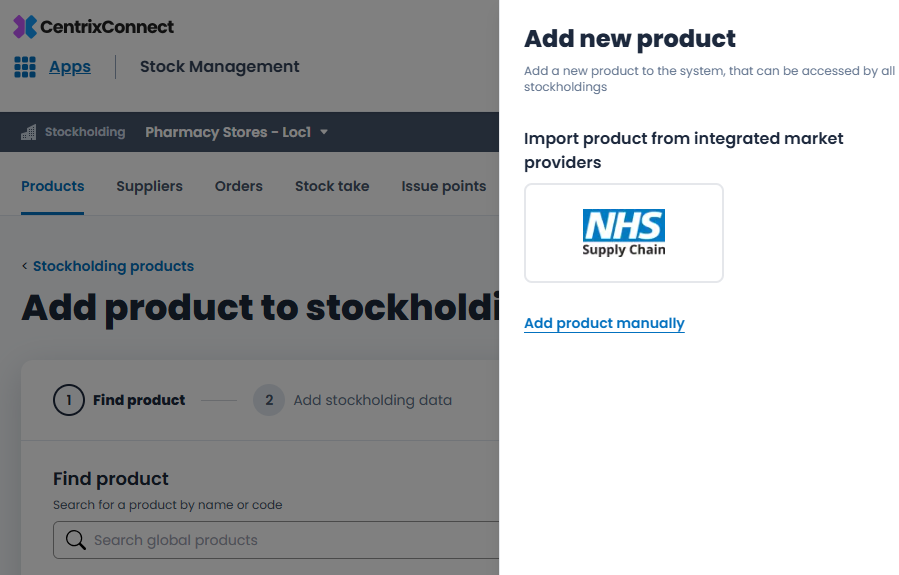
CentrixConnect is designed around a connected operating model for healthcare. Procurement and stock management can be used to support their respective workflows, while shared information creates a clearer path from customer demand and ordering through to inventory, finance, reporting and compliance.
CentrixConnect Procurement Platform
The procurement platform provides a central place for product, pricing, ordering and documentation information. It can support customer-specific pricing, self-service ordering and digital order status, reducing the need for manual order handling and repeated customer updates.
The platform is designed to integrate with systems such as SAP and Sage Intacct where required. Its vendor-neutral approach allows it to operate as part of a wider technology environment rather than requiring an organisation to replace every existing system.
Operational benefits include fewer manual hand-offs, more consistent order information and clearer status visibility. Financial benefits include better control of pricing and a more complete view of order activity. Benefits for healthcare customers include a more accessible ordering experience and less dependence on email or telephone updates.
CentrixConnect in numbers
Our solutions support in excess of £25m worth of transactions a year.
CentrixConnect Stock Management
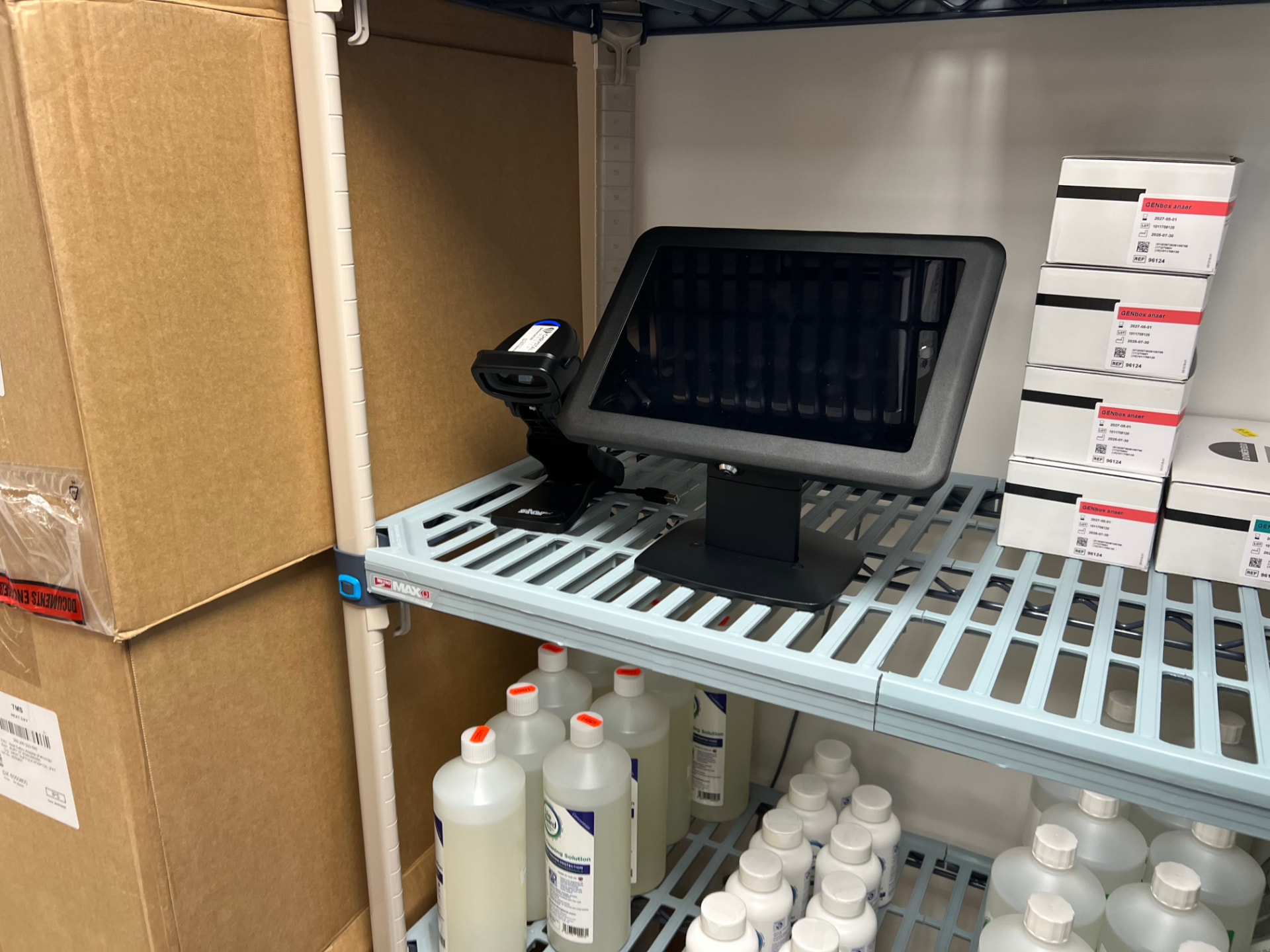
The stock management platform centralises inventory activity across departments and locations. It supports real-time stock visibility, minimum levels for replenishment, barcode scanning, mobile issuing, batch and expiry management, and reporting.
For operations and procurement teams, this creates a shared view of availability and usage. For finance, it improves visibility of ordering and stock-related costs. For compliance teams, it supports traceability and more efficient retrieval of records.
The platform can integrate with various tech environments, subject to the organisation's technical requirements and implementation scope. It's cloud-based, and intended to support standardised processes with limited administrative overhead.
Better together
The combined model connects a sequence that is often divided across several teams and systems:
- 1Customer or internal demand
- 2Procurement and approval
- 3Goods received
- 4Inventory and location
- 5Clinical or operational use
- 6Finance
- 7Reporting
- 8Compliance
Our purpose was never to 'sell' two unrelated products into healthcare organisations. It's always been to establish a connected operational ecosystem, in which each stage contributes reliable information to the next, making leadership and team decisions alike that much easier.
Chapter 8
If you're debating a change, here's what to ask yourself
A solid business case begins with evidence from the current process, rather than assumptions about the future system.
Questions to ask
- How many systems, spreadsheets and inboxes currently support procurement and stock management?
- How many people touch an order before it is complete?
- Can teams see stock across every location without making calls or combining reports?
- Could the organisation retrieve complete batch and expiry records today?
- Where is administrative time being lost repeatedly?
- How early can finance see committed spend?
- Which information is re-entered between systems?
Identify operational bottlenecks
Select one representative process and follow it from request to completion. Maybe that's a call from a clinical team asking where a specific consumable is, which then gets passed up and up the ranks before a clear answer can be given. Record each hand-off, approval, duplicate entry, delay and exception. The aim is to understand where the process depends on local knowledge or manual reconciliation.
Include the people who perform the work. Process maps created only from policy documents often miss the informal steps that keep the operation running.
Build the business case
Measure a small number of indicators over a defined period. Useful measures include administration time, stock adjustments, expired items, urgent orders, customer enquiries, audit preparation time, approval delays and time spent locating products.
Separate avoidable cost from necessary control. Approval, traceability and clinical judgement remain important. The objective is to remove repeated work around those controls.
Plan for change
Begin with a defined operational problem and a manageable implementation boundary. Agree ownership across operations, procurement, finance, IT and compliance. Establish the baseline before implementation and review the same measures afterwards.
Internal support is easier to build when teams can see how the change will affect their working day. Training, local champions and a clear route for feedback should be part of the implementation plan.
Suggested first step
Use the diagnostic tool from DLS Health (parent company of CentrixConnect), developed in partnership with Chrystal Medical, to identify where disconnected processes create the greatest burden.
Open the diagnostic toolChapter 9
Towards a clearer, cleaner, centralised future
The next stage of healthcare digitisation should focus on how information moves between operational processes - and how we can give time back to care and innovation.
We know that healthcare organisations already use a wide range of specialist platforms. The strategic question is whether those platforms contribute to a coherent operating model.
Over the next decade, healthcare organisations will need to make decisions with greater speed and financial discipline while maintaining safe, accountable processes. Fragmented information will make that harder because teams will continue to spend time establishing which record is current and what has happened between systems.
Connected operational ecosystems provide a more dependable basis for planning. They allow leaders to see patterns in demand, understand cost drivers, identify process variation and direct improvement effort where it will have the greatest effect.
The goal is not technological uniformity for its own sake. It is confidence that the organisation's information can support the decisions being asked of it.

Chapter 10
About our solution
Healthcare experience informs the way CentrixConnect approaches operational technology.
CentrixConnect provides procurement and stock management technology for healthcare organisations and suppliers. Its platforms are designed to reduce manual administration, improve operational visibility and support more consistent control across ordering, inventory, reporting and compliance.
Our approach is grounded in healthcare and healthcare technology experience, with an emphasis on practical workflows, integration and user adoption.
Appendix
Glossary and references
Glossary
| Term | Definition |
|---|---|
| Batch traceability | The ability to identify the receipt, location, issue and use of stock associated with a batch or lot. |
| Connected operational ecosystem | A group of systems and workflows that share dependable information across procurement, stock, finance, reporting and compliance. |
| Delegated ordering | Ordering authority given to staff or departments within defined financial and operational controls. |
| ERP | Enterprise resource planning software used to manage functions such as finance, purchasing and supply chain activity. |
| Single source of truth | A shared, governed record used consistently for operational reporting and decision-making. |
References
- [1] NHS England, 2025/26 priorities and operational planning guidance, published 30 January 2025 and subsequently updated.
- [2] NHS England, Strategic framework for NHS Commercial.
- [3] NHS England, Procurement policy and information on the introduction of the Procurement Act 2023 in February 2025.
- [4] Care Quality Commission, Medicines management guidance for healthcare services.
- [5] Care Quality Commission, Guidance on the management of controlled drugs and standard operating procedures.
- [6] Department of Health and Social Care, Design for Life roadmap and clinical waste context.
- [7] NHS Shared Business Services, inventory management framework market notice.
Take this whitepaper with you
Download the full document as a PDF to share with your operations, procurement, finance and compliance teams.